
RESEARCH
This page will present a review of different research sources I have consulted for my project. The page will showcase my research plan and research activities that I have conducted to answer my research question which underpins my project. The evidence of my research includes:
Research plan, Research design, Research topic and question, subject research ( literature and resources reviews), target audience research, skills and techniques research and production research. I will conclude with the research report where I will write about my research findings.
RESEARCH PLAN


To start off, I have inserted some screenshots from two mind maps I have made on Canva, which show the work I have created first. Creating these mind maps really helped with getting a further understanding of all the topics I have thought about and helped me narrow down which idea I want to focus on. This research plan will help me research different methods and also look into the strengths and weaknesses of each idea I have. The left image is the original mind map I did, just to brainstorm ideas and come up with different topics, the right image is the second mind map I did to go deeper and focus on the topics I feel the most confident with, which then lead me onto my final idea.
For my final major project in my last year at college, I have decided to research mental health affecting young people, specifically depression, and how it is so diverse in different people. I wanted to focus on this topic due to me suffering from it personally which has a huge impact on my life and the way I live and also to see how other people suffer from this to be able to help close friends or family if they're struggling, and lastly to gain my viewer's attention, make them check up on their friends or family, try to gain the confidence to speak out as I know its one of the hardest things to do. With this subject being broad, I have a lot to research and talk about, my main questions being targeted to young people as that's my target audience are 'How does depression affect young people?' and 'What is depression?', these will help guide me while researching for this project.
RESEARCH DESIGN
This section explains research design for my Extended Project. It starts with research question and follows by the the research design and research methods used in my project.
Research topic and question
As I narrow down my research, I will be focusing on the question 'What is depression?', as I feel confident in portraying this in my project using visuals and presentation.
Another core reason I want to go further into exploring this topic is that it does interest me, despite all the issues it causes me, I want to know more about why and how this happens, and how it affects people very differently. Personally, I feel as if I am a creative person when it comes to photography, filming, and editing. I really want to include a blue tint over my short film and practice with colour in post-production, furthermore, I'm confident that it will add to the mood and overall feeling of my short film, it will show visually how myself and most people feel when suffering from this mental illness. But I also want to try and move away from the stereotypical representation of depression, for example being sad and having no motivation, it's so much more than that.
Seeing as depression is a very broad subject and has a sort of scale or spectrum to it, I will be narrowing down my research to just young people, which is fundamentally my target audience for this project. I want to put my attention on breaking down the frowned-upon the subject of mental health, specifically depression. I want my viewers to be able to understand what I am trying to present visually and the topic behind it. While searching on google, I came across the two basic definitions of depression pictured below


The second picture stood out to me more, as it is a basic definition of depression in a mental health sense, but it doesn't really go into too much detail and has the stereotypical 'feelings of sadness or loss of interest in activities. I further looked into the website and there still isn't too much detail on young people, it's just in general. Depression is something that is really difficult to explain and to put into words, so I'm not expecting a huge detailed description on a website somewhere, but it feels like people who have written these articles on these websites don't struggle with it themselves, which I think should be spoken about more, but then again this is all down to people reaching out and gaining the confidence to do so, which is the aim of my short film I am creating.
Who/ what inspires me?
What do I know about my favourite media products?
Thirteen (2003) -Film
Who produced it?
Jeff Levy-Hinte and Michael London
What do I know about the director?
Its directed by Catherine Hardwicke, who is most known for directing Twilight. Thirteen was her first film created as a director. She's also known for 'Lords of Dogtown' (2005), 'The Nativity Story' (2006), 'Red Riding Hood' (2011), 'Plush' (2013), 'Miss You Already' (2015), and 'Miss Bala' (2019). She was influenced by Cameron Crowe, Richard Linklater, and David O. Russell, who she had previously worked with and gained experience using their techniques. She also raised the money herself for the budget for Thirteen.

What do I know about historical / political context of the product? (What art movement, period ideas, political or world view the chosen media product belongs to?
There is no political or historical context for this film, however it has sensitive/ taboo subjects which the film got criticised for, for example, youth drug use, self harm and underage sexual behaviour. It is a very relatable subject for some of the youth so I think its a good idea this film was made, but people do tend to glamorise this film and want to be like the characters, which is the bad outcome of creating a film like this.
What are the influences?
The influence for this film was Nikki Reed who co-wrote the film, she was 13 at the time and it was loosely based on the things she experienced at her aged, being pressured into drugs and other things at too young of an age.
What skills, production techniques, practises and knowledge has been used in the production of the chosen product? (identify skills, production techniques, practices and knowledge, critically analyse and compare with similar products).
This film was largely used with handheld cameras, giving the film more realism adding to the issues presented in this film. Also one of my favourite parts of the production for Thirteen was the use of colour, they include greens and blues throughout and in specific parts to emphasise the feelings the characters are going through. The blues show sadness or isolation, and the greens show a sort of euphoria or panic, for example in the scenes where drugs are involved.
Define the audience ( audience profile: age, gender, sexual orientation, socio – economic status, geodemographic, psychographics, what sort of category they fit into; mainstream, alterative or niche).
The target audience for this film would've been young people/ teenagers, due to the topics, characters and the storyline as a whole. Gender is not entirety specific, although the main characters are girls, same with sexual orientation. Personally I think this film is starting to become more mainstream in teenage girls recently despite how long ago it was made, due to TikTok, but at the time it was only really known in America and had a small following.
How is the world represented through each chosen media product? (groups, individuals, situations, stories etc. ) Look at stereotyping, genres, representation of genres, race, social classes, positive and negative images etc.
This film kind of steers away from the stereotypical teenage film, due to how raw and true it is, it includes scenes of self harm which is barely included in films during the time, and effectively shows mental health issues, drug problems and the peer pressure young people go through at that age. It shows a girl who becomes best friends with someone who introduces her to drugs and underage sexual activities, and in the end they end up hating each other, which happens a lot in real life and I think they portray these situations really well.
Speak (2004) -Film
Who produced it?
Fred Berner
Matthew Myers
Annie Young Frisbie
Jessica Sharzer
What do I know about the directors?
Speak, is directed by Jessica Sharzer. She is known for her work on the Showtime drama series 'The L Word' and the FX horror series 'American Horror Story'. She co-produced, directed, and co-wrote the screenplay for Speak, which was based on the novel published in 1999 that has the same name by Laurie Halse Anderson. The film got her a nomination for a Writers Guild of America Award in children's television scriptwriting, the Directors Guild of America Award for outstanding directorial achievement in children's programs, and won her the Woodstock Film Festival's Audience Award for best narrative feature.

What do I know about historical / political context of the product? (What art movement, period ideas, political or world view the chosen media product belongs to?
This film doesn't have any historical/ political context, but like Thirteen, it shows sensitive/ taboo subjects such as rape and trauma, which are certain situations that happen in real life, especially students. I think the topic is shown well in this film as Melinda (main character) gives blunt honesty and sardonic humour to such a sensitive topic, which slightly makes it more realistic as a lot of people use humour to cope with trauma.
What are the influences?
This film is based off of the novel by the same name, by Laurie Halse Anderson, which was published in 1999. From reading the book myself, the book to film similarities are very similar, and depicted visually perfectly. Mental illness is shown very well in this film too, although its about PTSD mainly it still has the aspects of depression with it.
What skills, production techniques, practises and knowledge has been used in the production of the chosen product? (identify skills, production techniques, practices and knowledge, critically analyse and compare with similar products).
There aren't that many different production techniques used, such as varied shots or lighting, everything seems raw and still, which further emphasises the theme of this Film. Like I said in the point above, The film to book comparison is not much different, which is something I really like when books get created into films, it keeps the story where it is and doesn't change any key events or topics.
Define the audience ( audience profile: age, gender, sexual orientation, socio – economic status, geodemographic, psychographics, what sort of category they fit into; mainstream, alterative or niche).
This book is targeted at young adults and middle/high school students, which adds to my target audience and helps me understand what I can do to successfully target my film towards my age group. Due to the storyline, I would say this is targeted more towards girls, and that such a serious situation can still be incorporated in film and shown well. This film is an indie film, due to the small budget, locations for example the production only took place in Columbus, Ohio because a production partner, Matthew Myers, was relocating there with his wife, and that it was broadcast on Showtime and Lifetime in 2005 after premiering at the Sundance Film Festival in 2004.
How is the world represented through each chosen media product? (groups, individuals, situations, stories etc. ) Look at stereotyping, genres, representation of genres, race, social classes, positive and negative images etc.
Like Thirteen that I have mentioned, it moves away from stereotypical youth films, it has serious subjects that are portrayed well. It shows a girl who gets raped at a party and loses all her friends because she called the police, and choses silence, and she feels guilty even though she was a victim of sexual assault, yet, by seeing other victims, Melinda is able to speak out. It centres on a character who gains the strength to overcome her trauma, and shows al the situations that have happened.
UNSPOKEN (2018) - Short Film
Who produced it?
Shane Grubba
What do I know about the directors?
Its directed by Zoë Birse, and explores themes surrounding depression and suicidal thoughts, and highlights the importance of speaking up. There isn't much about the cast as this is a short film on YouTube. She is known for her work on White (2021), I'll Come Back for You! (2022) and The Intentions of F. Scott Fitzgerald (2017).
What do I know about historical / political context of the product? (What art movement, period ideas, political or world view the chosen media product belongs to?
There is no historical/ political context to this short film, but like the other films I have researched, this topic is a very serious subject, which I think is portrayed really well in this. It emphasises the loneliness and hopelessness that depression causes, and the effect it has on the people around you if it lead to something more.
What skills, production techniques, practises and knowledge has been used in the production of the chosen product? (identify skills, production techniques, practices and knowledge, critically analyse and compare with similar products).
The creators represent perfectly what depression can feel like, by using different techniques such as depth of field, to to highlight the loneliness and the isolation depression puts you in. Adding to my point about loneliness, the sound used in this short film is very quiet, it shows the character zoning out and the sound going almost blurred, which is what it really does feel like, like you're alone in a room full of people.
Define the audience ( audience profile: age, gender, sexual orientation, socio – economic status, geodemographic, psychographics, what sort of category they fit into; mainstream, alterative or niche).
The target audience for this short film is mainly people who suffer with depression, and that they should seek help and they're not alone, however I don't think there is a specific age group or anything else, its just mostly people who suffer from depression. This film is an independent film, it has a small following but such a strong message created.
How is the world represented through each chosen media product? (groups, individuals, situations, stories etc. ) Look at stereotyping, genres, representation of genres, race, social classes, positive and negative images etc.
The situation depicted in this short film is very real, its almost unsettling which has been done by the different techniques listed above, and the fact this can happen to anyone you know, no matter how close you are to the person, its a really upsetting topic that the creators have portrayed in such a way that it feels real.
How do my findings inform my topic question?
From analysing and researching my three chosen media products, I have gained more confidence in that I will achieve my targets for my short film I'm going to make, and I have gained more knowledge on my chose topic of mental health, which includes features I want to incorporate in my FMP, and overall a better understanding of what I want to create to portray visually how I think depression feels and looks like. For example, I really like how Thirteen uses colour to focus on visually showing how the characters feel, and with UNSPOKEN, the use of depth of field is something I would like to include to further show emotion, an the outcome of this video, the message that is visually shown is what I want to use in my FMP. I managed to understand how different techniques in the three media products I looked at all prominently show how there are many different ways you can capture emotion. Furthermore, I really like the idea of having not much dialogue, like UNSPOKEN, it breaks down the emotions the character is feeling such as isolation even though the character is at a party.
My idea is still the same and hasn't changed from my original, however I have collected more information on my chosen topic, which has solidified my FMP topic as I feel more comfortable with what I am talking about. By conducting this research, it has also helped me develop my skills in researching and analysing topics/ data, which will then further help me in the future as I will have more knowledge on what I should do to conduct research.
My main question is 'What is depression?' (specifically in young people), conducting this research has helped me further understand how I can visually answer this question in my short film I'm going to create, by using different techniques such as depth of field, colour in post production, lighting and camera techniques.
RESEARCH PLAN & STRATEGIES
Under this section I will present research methods and design for my project. I will then present research I have done for my target audience, further research for the subject of my project, research on skills and techniques required for my project and the production research.
SUBJECT RESEARCH
Primary-
This part of my research will be shorter than my secondary, as I feel like I can get more detailed information using the secondary research method. I will be focusing on my research question: 'How depression effects young people'
I will be conducting this research by using:
-
My own, personal experience, views/ opinions
-
Creating a questionnaire
-
Taking notes from books
My own, personal experience, views/ opinions
Mental illness itself really needs to be spoken about more. I remember at school we barely even touched upon the subject, we had PSHE which was a combination of social, physical and mental issues outside of our curriculum, but we rarely spoke about mental illness, or if we did it was 2 lessons worth. My secondary school really made my mental health issues worse, it was mainly anxiety to start off with, but then it got worse. My school always bragged about how inclusive they were, how they had counselling available for anyone etc, but in reality, all they cared about was our grades. When I was in year 9, I was recently diagnosed with social anxiety, the school then decided to put me in a group counselling session with other people who had social anxiety, it was the dumbest thing they've ever done. I really struggled getting school, feeling so unmotivated and physically sick so I missed loads of school, the teachers didn't help whatsoever, they completely dismissed everything and didn't actually take a step back as to why some students are failing. I had one teacher who was the deputy headteacher who actually helped me with my mental health, she was also my French teacher who could see I was falling behind and offered me extra support away from the class. This made me feel better about coming into school knowing I had that one teacher, but it was really too late by the time I got help, I was in year 11, and I finished in March instead of May due to Covid.
I was first diagnosed with general and social anxiety when I was around 13, but I initially saw the signs when I was 11. I was going on holiday to Majorca with my family and we stayed in a hotel overnight at the airport as we had an early morning flight, the night before I couldn't bring myself to eat and same in the morning, then I ended up being sick as the plane was taking off. I felt very weak and shaky for both of those days but I was fine after. Then it progressively got worse throughout school when I couldn't even go in because I felt so ill, even though I wasn't it was just my anxiety. Although my short film is about depression, anxiety is definitely apart of it so that's why I've spoken about my experience with it. Then my depression started outweighing my anxiety in year 9 due to a traumatic experience I had. I officially got diagnosed when I was 16 but I had already suffered way before that. The thing that annoys me is that a lot of young people get dismissed due to their age and hormones, but they are really suffering from a serious mental illness. Secondly I was going through CAMHS (mental health NHS service for under 18s) in May 2020 for a few months, and it got dismissed a lot due to Covid and the impact it had on everyone, although I had suffered with depression for many years before that, and also the fact that CAMHS call it 'low mood' instead of depression. This really frustrates me as it seems they aren't willing to accept a young person has depression. My experience with CAMHS isn't the best, they didn't help me in any way they just made things worse, they always said things were confidential but then proceeded to tell my parents which made me feel like they weren't taking me seriously. I know its difficult because mental illness includes a lot of self help, but they refused to put me on anti-depressants until I was nearly 17, they have helped since but they should've put me on them earlier so I could've benefited more at school. The best thing people can do with people who suffer from mental illness is just be there for them, help them in any way they can and do not judge them. A lot of parents seem to not understand this as they just call their children lazy etc, which makes them not want to talk to their parents.
The reason why I have mentioned this in my research is because of how many other young people have had the same experience as me, people who I was friends with at different schools never got any help, so its a universal thing in so many schools, this has to change.
Questionnaire
For a part of my primary research, I created a questionnaire and asked some of my close family and friends to complete it. I even put the link on my Instagram story so people who follow me could answer if they wanted so I could get more views from people who I don't know. I made the questionnaire anonymous to make people feel more comfortable with answering. I managed to get 19 responses overall which is more than I expected.
Here is the link: https://forms.gle/TSqDJxPNb7ApP66h9
Responses:


By creating this questionnaire and gathering all the responses, its helped me a great deal to understand more about depression and how other people live with it, and also how people view it. The question 'how would you visually represent depression' has given me more ideas on how to portray depression in my film, and has helped me gain a wide variety of views and opinions that people have towards depression. I now feel more confident for what I want to create and have a better idea visually for my FMP.
Taking notes from books
To start off this section, I will be conducting some of my research by looking into books from the college. I decided to take notes and use quotes in my note taking, and analysing them. These notes helped me understand more about my research topics, and also lets me break down my knowledge I have gained from these books and display them in my research, in an easier more simple way.
Book 1
Firstly, I looked at a book my tutor gave me called 'Visual Communication' by Giorgia Aiello and Katy Parry. Its all to do with understanding the visuals in the media culture, and explores a range of approaches for visual analysis, including a range of methods to use in my work.


Even though my notes are brief, they've really helped me understand the subjects I was looking at in the book, and I also benefit from writing things out as I tend to understand them more than just reading something. Researching and looking into this book has really benefited me. Although this book isnt directly related to my topic, its really helpful to me to look at, due to it being about visual communication. The two headings I have noted down were the ones that are the most similar to my topic.
The first section I noted the quotes from, talks about stereotyping, and how it clearly comes with a sense of hierarchy which I found interesting. Thinking about it, it makes total sense, there are certain people who don't believe in mental health, or cant accept the fact that its a thing, these types of people tend to thing they are higher than everyone else, when in reality they're just close-minded. Another interesting point is the quote of 'campaigns with the specific intent to challenge stereotypes, often play within the viewers experience' it then continues to give examples. This is a very true point as it gains more peoples attentions because of all the stereotypes. For example it says 'the apparent teenage mugger who is actually chasing the robber', everyone would be so quick to assume that the teenager is doing the robbing because of stereotypes that people have learnt from others. I need to look at the stereotypes and make sure I stay away from them and try to make my FMP as relatable and real as possible.
The second section I noted quotes from talks about the sheer amount of variety in todays media to raise awareness. This is a really good point as there are so many activists that use the media to raise awareness for their topics, which is what I will be doing, using YouTube as my platform to raise awareness for depression. It also talks about the disadvantages of people using it against you in the opposite thing you want to raise awareness for, such as protest with two sides. They form such a huge amount of archives for future generations to look at as stated in one of the quotes, and can be including when learning history in the future.
They both helped me gain more knowledge on what I need to do to represent depression visually, and stay away from stereotypes that can make my video false, and also to use my platform to the fullest and try to portray depression visually as much as possible.

Book 2
The second book I looked at and took notes from was called 'Cinematography - Theory and Practice' by Blain Brown. I specifically looked at composition, lighting, and how they all join together to create visual tension. It explores the various ways all of these can be used when creating a film, and all the emotions they can portray onto the viewers. It includes how you can successfully show mood when producing a film, and gives lots of helpful tips and knowledge I can use when I create my final major project.


By researching this book, its really helped me understand composition and how to successfully show mood when creating a scene, and how all the imagery put together can convey certain feelings. All of the topics I researched in this book benefited me, I can use this knowledge I have gained in future projects also. 'More than just a picture' section interested me the most, as it goes into detail on how a film and photography actually is just more than a picture, it gives the audience information that is needed for the scene to make sense, and adds to the tone and mood of the scene. Good composition techniques solidify the way that the audience view the information that's been given, so taking the time and effort to practice composition is essential. 'Light as a visual metaphor' is heavily important when creating a film. You need light to be able to show certain emotions for the viewer to understand, and to add to the mood. For my project I will be using a blue tint over the short film and it will also be darker than usual to convey the feelings of sadness and despair.
The last section I wrote about was to do with visual tension, this majorly impacts the scene you are creating if it has suspense in it. I drew diagrams of an example to help me visualise what I was researching more.
Overall doing this research on these books has benefited me greatly as I know feel more confident in my composition, lighting, and how I can create tension and build up of a scene. It given me a clearer idea on what I want to accomplish when I create the mood for my short film; I want to be able to describe depression visually using a combination of all the things I have learnt from conducting this research.
Secondary-
For the bulk of my research, I will be using the secondary research method, as I feel that's where I will get the better information from for my research plan. My research will be divided into 3 sections with short questions I will be answering to a detailed extent.
I will be using and looking at:
-
Websites
-
YouTube
-
Short videos/films


1) How to successfully use colour when creating a film (colour theory)
To start off, I was researching different books on WHSmith's and the internet, and I came across this website that seems to explain colour theory pretty well. The pictures inserted to the left describe colour theory really well to me, and perfectly go into detail about the emotions that are connected to these colours. This website by No Film School goes into detail about how colour is used in films, and how to use colour theory and the emotions that become symbolic throughout the examples.
The definition of film colour theory is that a particular colour in a film evokes a particular emotion in the audience. These colour manipulations can be used to alert the audience of the filmmakers intent, contrasted to send a message, or destroyed to create a dramatic irony. I found a YouTube video by StudioBinder: Color Theory in Film — Color Psychology for Directors: Ep5, that explains colour theory in film well. From watching this video, I discovered that there are three factors when determining colour, hue, which is the colour itself, saturation, the intensity of the colour, and brightness, how light or dark the colour is. When using HSB, you can easily create a complex colour scheme, you can precisely identify the best colours to invoke certain feelings for your audience. Bright colours normally seem happy or exciting and darker images often seem dramatic and usually makes the viewer focus in on something. If you want to deepen your frame, you can utilize colour psychology in your film to evoke a period in time, foreshadow events, heighten characterizations, or set an overall mood for the audience. Colour creates ambiance, intensifies emotion, and amplifies symbolism. Because of all of this, directors, cinematographers, and the designers involved choose their colour palettes before they film in preproduction.
While browsing websites, I came across something that stood out to me; 5 tips for using colour in film on www.MasterClass.com.
-
Use colour discordance to direct audience attention- Colour discordance is when one colour clashes with the rest of a picture, drawing attention to the object that stands out. A particularly heightened version of the colour discordance effect is the inclusion of one or two coloured objects within a film that is otherwise monochromatic. Steven Spielberg famously used discordant colour in Schindler's List, including one girl in a red coat within a film that is otherwise in black and white.
-
Use complementary colour schemes to create striking images- Complementary colours are colour pairs that fall exactly opposite each other on the colour wheel—one primary colour and one secondary colour. Red and green are complementary, as are orange and blue, as are yellow and purple. Complementary colours produce some of the most satisfying colour harmonies in filmmaking, bringing a satisfying contrast without creating discordance.
-
Use analogous colour schemes to connote harmony- Analogous colours fall next to each other on the colour wheel, like red and orange or green and blue. Depending on how they’re used, analogous shades can create serenity or an oppressive sense of uniformity.
-
Use triadic colour schemes for satisfying images- A triadic colour scheme involves selecting three different colours and emphasizing them above all others. Many superhero movies use a high-contrast triadic film colour palette, although the technique was more popular in the early days of Technicolor filmmaking than it is today.
-
Hire a professional colourist- If your film budget allows it, a professional colourist can add colour consistency to your final product using the process of colour grading. Colour grading allows scenes filmed under different lighting conditions to maintain the same basic hues and shades.
This information is really useful for me as it gives me basic tips on how to improve with using colour in film, I learned about what some words mean that I hadn't heard of before such as analogous and colour discordance. All of these tips I can apply except the last one as I am filming my project on my own and don't have a budget due to me not spending any money on this, but that doesn't mean I cant apply it in the future when I go on to get a career in the film industry, and start creating my own films with a bigger budget. However for my film I will be focusing on a blue monochrome tint, to amplify the emotions I want to create, but this information is really helpful for me in the future as stated above, when I go on to create different films and longer ones with more narrative, I can include these tips. Looking at this website has really opened a range of possibilities for me to use colour later on when I go into the film industry, I feel confident enough to experiment with film more.
For my film I will be using more blue/ green tints as I think the emotions that are connected to these colours fit well into my final major project I want to create. I'm starting to gain more knowledge on colour theory and how I can incorporate it into my ideas, I can even use this for future reference when I do more short film projects.
2) How depression effects young people (target audience)
Feeling down, moody or a little depressed is all a part of life, young people tend to worry about exams or school, jobs and relationships with the people around them. But sometimes when this sadness doesn't go away for weeks, months or years it starts to effect their everyday life, which is then when it becomes a serious issue. One of the common causes of death in young people is suicide, so depression should be taken way more seriously.
Statistics
-
One in six children aged five to 16 were identified as having a probable mental health problem in July 2021, a huge increase from one in nine in 2017. That’s five children in every classroom
-
The number of A&E attendances by young people aged 18 or under with a recorded diagnosis of a psychiatric condition more than tripled between 2010 and 2018-19
-
83% of young people with mental health needs agreed that the coronavirus pandemic had made their mental health worse
-
In 2018-19, 24% of 17-year-olds reported having self-harmed in the previous year, and seven per cent reported having self-harmed with suicidal intent at some point in their lives. 16% reported high levels of psychological distress
-
Suicide was the leading cause of death for males and females aged between five to 34 in 2019
-
Nearly half of 17-19 year-olds with a diagnosable mental health disorder has self-harmed or attempted suicide at some point, rising to 52.7% for young women 1 in 3
-
1 in 3 mental health problems in adulthood are directly connected to an adverse childhood experience (ACE)
Just from looking at one websites statistics alone you can see how bad depression is in young people. Depression is a is one of the most common health problems for young people, there is no single cause of depression, life events, hormones, chemical imbalances, and genetics can all play different roles depending on the person themselves. While each young person will have their own responses to life events, some wont lead to mental illness, some circumstances can contribute to depression in young people such as school work, falling behind and having no motivation to catch up, leading to bad grades and not being able to get the future they want. It could be caused by trauma; domestic violence, family death, family issues, or it can even be slightly hereditary. Furthermore is could be self-consciousness, anxiety, health issues, post partum, being bullied, there are so many factors that cause depression.
Most young people who have depression get dismissed more than they should by teachers, friends and even family. Lots of family members don't believe in it, or say why should you be depressed when you have all these things etc, which makes everything 10x worse. Adults who don't suffer from depression really need to take a step back and research into mental health problems as over half of teenagers suffer with some sort of mental illness. And talk to them, if the parents of family members don't have a good relationship with their children, which can even be a cause of depression, then theres less of a chance of their child actually listening to them. By having good bond with your children, theres more of a chance of them coming forward about how they're feeling.
Some symptoms of depression in young people include:
-
feeling irritable
-
feeling tired
-
feeling worthless or guilty
-
having thoughts of death or suicide
-
having trouble sleeping – either falling asleep or staying asleep
-
lacking motivation
-
losing interest in food or eating too much
-
losing weight or gaining weight
-
lack of interest in their hobbies
-
poor hygiene
-
use of cigarettes, alcohol or illegal drugs.
-
self-harm
(These are also symptoms of depression in anyone)
Behavioural changes:
-
social withdrawal
-
lower marks at school
-
changes in mood and behaviour
-
risk-taking behaviour
-
use of alcohol and drugs.
Treatment:
When dealing with a young person who is showing signs of depression, encourage them to talk about how they feel and what's contributed to it with someone they know and trust, such as a parent, teacher, family member or friend.
The next step is for the person to visit their doctor or GP to learn and discuss whether they have depression and what can be done to treat it, such as medication or therapy. This support can include psychological therapy (CAMHS) that focuses on gaining skills and ways to cope to deal with depression, and to change their negative thinking patterns, as well as lifestyle changes which includes schedules.
Anti-depressant medication is also a form of treatment. It can take up to six weeks after beginning the medication for it to start working, but most young people will notice an improvement. Encourage them to take a not and speak with their doctor about any change in their moods.
There are also self-help tips for improving mental health that need to be done too which include:
-
exercising
-
eating healthy food
-
meditation
-
speaking regularly with trusted friends and family
-
engaging in something you enjoy
-
setting small targets for yourself
Overall, this research I have conducted has helped me to look at some statistics and websites to understand the reality of depression, and how serious of an issue it is, furthermore how large the scale of depression is. The research I have gathered will be listed in the references section at the bottom. Its really assisted me in the direction I want to take my short film in, I have widened my knowledge on the different symptoms and the statistics of depression in young people, and I'm also understanding more about the topic. I also hope to be able to apply my findings in my short film and be able to reflect my research in that.
3) How to visually portray depression in film
In film, the bar for what passes as a representation of mental-health has always been fairly low. Whether its depression or more of a serious mental illness, its has typically been portrayed in a way that is either stereotypical or stigmatising. Its often glamorized and becomes the stereotypical representation, to the point where we don't treat the mental illness with the seriousness we should normally. These films listed below are the ones I have chosen to research because in my opinion, they depict depression well. Clinical depression is a misunderstood issue, and one whose understanding is aided by the media. This is unfortunate, but especially because major depression is one of the most common mental illnesses in young people in the world.
Girl Interrupted
Many of the characters behave in all sorts of manners, ranging from being scared, lost, happy or sad, and disturbed due to their varieties of behaviours and mental illnesses they suffer from. All the characters have different emotions that affect the way they act and respond to various situations. It explores the story of a young woman through her experience with personality disorders and traits during her stay in a McLean psych institution during the 60’s.
From watching Girl Interrupted, I personally think they show mental illness really well, although it doesn't particularly focus on depression, the way they represent the other mental illnesses such as personality disorders and eating disorders, is quite realistic, and shows peoples friendships developing and breaking up throughout teenage life in a psychiatric hospital.

Melancholia
The film focuses on Justine’s psychological state as she is facing certain difficulties. Overall, they use multiple metaphors for depression, but they also include characters that are struggling with the illness. In the scene where Kirsten Dunst’s character shows us one of depression’s traits at the dinner table, it shows the inability to enjoy that which you once loved, as she is served her favourite meal, but cannot taste it.
This film has become a kind of starting point for film fans or students who have experienced depression, as it has a very powerful depiction, because it refuses to show what people do when they suffer from mental illness and are often pressured to dismiss their emotions. There is a situation makes the pain that big that it literally initiates the end of the world. The combination of science-fiction, realistic characters, relationships and an everyday life is merged together really well.

Watching films can also be a sort of therapy for people, instead of having 1 to 1 counselling sessions, you're able to watch a film or video and feel affected by it, you feel safe and able to talk about your experiences. They immerse people in a story because they engage multiple aspects of the brain. Language, imagery, special effects, and music all effect a person differently. Films offer a unique experience of enhancing thinking while simultaneously pulling people out of their own thoughts. Also, films evoke strong feelings that can lead to relief for the viewer. Sometimes, watching a film is incorporated into therapy. A counsellor might assign a movie based on depression as homework, and will discuss aspects of the film during their sessions and how they were effected by it. Other times, people watch films on depression on their own simply to relax and enjoy. Either way, people can grow and gain knowledge on the subject from watching the videos and films.
Benefits:
-
Creates a safe way for people to talk about their own experiences, in the context of a story and its characters
-
Increases understanding about the mental illness and empathy for people living with it, which can including yourself
-
Larger insight about themselves, others, and depression itself
-
New perspectives on certain events that can contribute to their negative thoughts and feelings
-
Shows ways how others solve problems and heal from depression
-
A more in depth sense of connection with others who are experiencing major depression
-
Hope for the viewer, they can feel more comfortable about expressing their feelings
From creating my questionnaire for my primary research, one of my questions was 'how would you visually represent depression?'. I asked this in my questionnaire to gain more ideas for scenes I can create for my short film, some of the answers were:
-
slow movements
-
a person looking different but still them
-
darkness/ blackness
-
constantly having an empty space
-
sadness
These ideas are slightly stereotypical, but have broadened my knowledge on how people think they would visually show depression. They've helped me explore different options and directions I can take my short film in.
Some tips for portraying depression in film are:
-
Include the perspective of a person with lived experience
-
Do not reduce a character to their psychosocial disability
-
Portray sensitive topics in a sensitive manner
-
Steer away from reinforcing certain stereotypes
-
Normalise mental illness
-
Tell positive mental health stories
-
Ensure inclusive and accessible production and communications


Example - Euphoria (HBO)
Another series that I like that shows mental illness really well, is Euphoria on HBO. The director and creator Sam Levinson has been open about his own issues that are shown in this series such as addiction and depression as a teenager. So he based scenes and events in Euphoria from his own experiences, which demonstrates a raw and unfiltered insight into the life of someone with lived experience. The series focuses in on the lives of multiple high school students, and shows how they navigate a world filled with various kinds of violence, bullying sexual abuse, mental illness, neglect, anxiety and loneliness. Is told from the perspective of 17-year-old drug addict named Rue, who is played by Zendaya. The series is a great depiction of high school life, struggling with all these issues that come with being a teenager, as well as an insight of a culture that is setting young people up for hopelessness.
This series shows very sensitive topics such as abuse, addiction and mental health issues. Its slightly glamorised due to its audience, cast members and the directors depiction, as the audience is mainly 13-20 years old, when you're younger especially you tend to want to be like these characters as you think it looks cool and fun, when in reality its no where near that. Personally I think the cinematography done by Marcell Rév, fits perfectly for the scenes involving these issues stated above, they really make you feel immersed into the characters worlds and become sympathetic to them. The world of Euphoria is unsettling, not just because the characters are making poor choices, but because the world that young people today, including myself, are living in looks frightening. Rue’s birth is depicted with sadness, as she is born just three days after 9/11, while her parents are holding her while looking on the TV as the Twin Towers fall repeatedly. Unlike other teen shows from the past that think they show realism, Euphoria is more interested in providing audience with an immersive experience and it’s more likely to view the series as a mood rather than a guide to teenage behaviours, or just another teenage drama. Furthermore, according to researchers such as Jean M Twenge, today’s teen is more likely to be lonely and experience anxiety, but also less likely to drive, have sex, or try drugs than previous generations, teens today are even less likely to go out shopping or to see a film without parental supervision, due to the amount of things that have changes since the 80s or 90s for example.
From watching Euphoria, its given me a wider variety of directions I can take my short film in due to the amazing cinematography and imagery created in the series, to further immerse the audience into watch heir watching, and feel comfortable enough to come forward about how they feel, and how all their experiences have made them the person who they have become today.
Lastly, from researching this specific question, Its helped me understand a lot more about what I want to visually represent in my short film. Its given me examples to look further into, and how those creators and cinematographers have managed to capture and invoke multiple feelings towards the audience, and immerse them into the world of their film. I have a greater understanding on what I want to create, and also how I'm going to accomplish that from completing all this research towards my final major project.
TARGET AUDIENCE
For the next part of my research, I have included primary and secondary research. This next part is all about my target audience and who I am aiming my video at for and why. I will be covering the main sort of questions when it comes to target audience, for example, ‘Who?’, ‘What?’ and ‘Where?’. This is so I can establish who I’m aiming my short video for and gain more knowledge on my chosen target audience so I can achieve my topic question.
Who is your target audience? Who are you aiming your product at?
For my final major project, as stated previously my target audience is young people, roughly from ages 13-20. I decided this age group for my target audience as it fits my project the best, and by using all my skills and techniques I have learnt on this course, I will create a short film which will be directed at young people. Furthermore, I am aiming my product at young people who struggle with mental illness and want to feel heard and feel more confident at speaking out, and also feel like they’re not alone. I am hoping my short film gives them the motivation to speak out. In addition, by choosing this target audience, I know I can target this age groups weaknesses as I am part of this age group myself, and have friends that struggle in different ways too, so I have a wide variety of knowledge I can put to use when creating my final major project. Therefore, I feel like my target audience I have chosen is more than suitable because I feel like I can use my project to make an impact on my viewers.
Overall, for my target audience I am aiming it at young people, specifically 13–20-year-olds who want to gain the confidence to speak out from suffering from mental illness. My main goal is to make people feel confident in that they are not alone. As an 18-year-old myself who struggles with mental illness daily, I have come a long way since first feeling like this, and I want other people to be able to feel the same way and to reach out for help.
What type of audience is it? Investigate the target demographic and record the type of media or entertainment they consume.
Like I said above, the audience I am aiming at are teens like myself and people who suffer from mental illness and want to feel comfortable enough to get the help they need and feel more confident in themselves. The teenage stage in life can be the best part of your life or the worst, its an awkward period of your life where your finding things about yourself and becoming more mature, therefore lots of teens get lost with mental illness.

To start off this research, I investigated statistics surrounding the mental health of young people which is pictured above.
From looking at these statistics, you can clearly see people aged 16-24 suffer the most with mental illness, which is another reason why I chose to focus on teenagers for my target audience. Furthermore, teenagers are mostly looked down upon due to going through hormonal changes which is why mental illness in young people often gets dismissed. It’s a very frustrating things that a lot of people have gone through, and I want people to move away from the stereotype of ‘being hormonal’ when it’s actually a serious mental health issue.
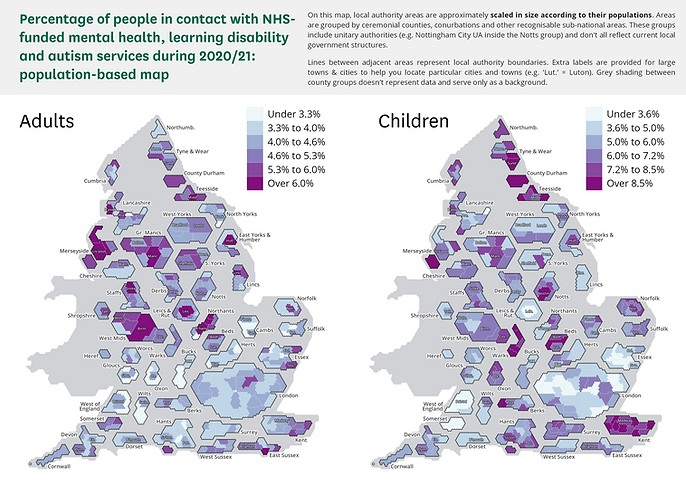
Another type of statistic which is a cartogram map pictured above, shows that less than 8% in most areas in the UK have tried to reach out for help, this is a very worrying number as its so low, which is another reason why I have chosen mental health as my subject. People of all ages are suffering everyday with mental illness and not getting help, especially young people, I want people to be able to feel comfortable enough to speak out and get help with their issues because of how I will portray my video.
To conclude, this secondary research shows me that that a lot of people suffer from different mental illnesses, and not many speak out or get help, the numbers are worrying but us as a society could do so much more to help out.
SKILLS & TECHNIQUES
For this section of my research, I will be focusing on the skills and techniques I will be using in my short film, and also the job roles that are the most relevant to me. In order to create a successful film, you need to have the skills and knowledge on different techniques for it to be good quality. This part of my research will be helpful for me in the future because of the research on job roles and will give me more insight on what skills I need to use to make my short film. Some of this research is from my previous work.
COMPOSITION
Rule of thirds- In film production, the rule of thirds is the basis of composition. It splits the frame into thirds horizontally and vertically and divides the image into nine equal parts to create control points. Usually, you place your subjects or objects along or within the lines or the intersection. This draws the viewers attention to the image and emphasizes the subject. The empty space left should be positioned in the direction the subject is looking in or heading towards.
Symmetry- This technique creates a mirror image/ identical image, it’s a powerful tool that straight away makes it artistic. Depending on the way you take the photo and what the background is, you can make the symmetry more prominent/ less. In this photo you can see the helmet is placed in the center of the image, with it being the main focus.
Leading lines- This composition technique draws your attention to a certain point which is normally the background or the pattern which is created using architectural structures, nature, objects. The background is usually out of focus to add effect. In this image you can see the objects are placed behind each other which creates a repetition.
Depth of field- This is the distance between the closest and furthest away objects in the photo, in the center of the photo its sharply focused. The distance is the first thing to think about when using this technique. It redirects your attention to certain areas of the photo/background.


SHOT TYPES
Establishing shot- An establishing shot is most common in an opening scene, or to show something important that is going to happen/ already happening. It creates context.
This type of shot is used to show the meaning of the scene and has an overview of what's going on. It usually creates a mood for the scene. They are normally a few seconds long just enough to set the scene.
Long shot- A long shot is the view of a scene from a faraway distance, but you can still see what's going on. Its typically used to show a link between the characters and their environment, also showing the background sets the mood for the scene and gives us information about what's going to happen.
Mid shot- In film, a mid-shot is where the camera angle is place from the waist up from a medium distance. You can still see a great amount of the background, but it focuses more on the person. Also, it could be viewed as another person being within a few meters of someone.
Mid shots are commonly used for dialogue scenes, they make sure that the person watching picks up on every detail from facial/ body expression to what's going on in the background.
Mid-long shot- A mid long shot is also known as a ¾ shot. They make sure that you can see the person/ object from the knees up.
Its most used when there are 2 or 3 people in the shot to guarantee you have a clear visual on the person and their expressions. It shows a clear comparison between the person and their surroundings.
Mid-close up- A mid close up shows the persons head and cuts off at their chest. The main focus is on the person and their emotions and expressions, as there isn't much surrounding.
It's mostly used in documentaries and interviews as they want you to focus on the person and what they're saying, so you don’t get distracted by what's going on behind them.
Close up- This type of shot makes it clear that we need to focus on the persons emotions as it cuts off at the persons neck. It adds emotion to the scene as all you can see is the persons face which can give off a lot of detail. It’s filmed with a long lens at close range, which allows the viewer to understand the feelings they have.
Extreme close up- This shot ensures a clear view of the persons face, which draws specific attention to emotions, the persons thoughts/ expressions. Usually, it is shown on specific parts of the body, for example an eye, or other facial features.
As it's so detailed, it shows us people and objects differently to the way we normally see them, it feels like you're entering their personal space.
High angle shot- This type of shot is where the camera is pointing down on the person. These shots can make the person seem vulnerable and weak, especially when their surroundings contribute to the mood, effects and emotions going on in that scene.
This is similar to a bird's eye view but not as far away. It could also show that they're looking into the universe/future.
Low angle shot- A low angle shot is where the camera is positioned lower than usual, normally at someone’s knee height, which means you looking up at them. This type of shot certainly makes the person look powerful and strong compared to if it was a mid-shot. It can also show dominance.
Dutch angle- This type of shot is also known as Dutch tilt, canted angle or oblique angle. This shot requires the camera to be sitting at a diagonal angle. It makes sure that the horizontal line of the shot is not aligned with the lowest part of the frame. It creates the effect that you're looking on your side/ tilting your head. This often creates a feeling of uneasiness, tension, or uncertainty.


TECHNIQUES
180 degree rule- 180-degree rule is when the camera stays on one side of the characters, and then pans 180 degrees around them. You can break the rule only if it fits the scene, for example it would be good in horror films to create confusion to the audience to add more effects. Another example is you can make it look like the character is talking to themselves by panning around them then using cuts to establish what’s happening. Cutting on action is another way of showing this as people are focused on one point and nothing else in the scene so the audience knows what to look at.
Exposure- Light is the main aspect to exposure; without it the image won’t be captured on a sensor. You must keep in mind that you need to measure light, too much and not enough can ruin the image due to it not being clear as it determines how light and dark the image is. It can be measured by its brightness by using apertures and f-stops, and duration by shutter speed. Balancing the three settings is very important so that the rest of the image is good quality, it can sometimes include depth of field. Too much light can lead to over exposure which means you can barely make out the image as it's so white, under exposure makes the image so dark you can also barely make out the image.
Shutter speed- The shutter in a camera blocks the light from exposing the sensor until you take an image, which then quickly opens and closes but the depends on the shutter speed. When it opens and closes it gives the sensor a brief flash of light. The lower the number the faster the shutter speed, some examples are 1/1000s, 1/250s, 1/30s, 1/4s, 1s. the choice of shutter speed is dependent on the amount of light there is, the speed of the subject and the photographers ability to hold and use the camera. Some examples of certain shutter speeds are still life shutter speed won’t affect the subject as its motionless, a person walking will be 1/125-1/250th of a second, a car moving at 30mph will be 1/1000-1/2000th of a second. A long shutter speed will let in a large amount of light, and the opposite a slow shutter speed will only let a slight amount of light in.
Aperture- This is the opening and closing on the inside of the lens, this equals out the amount of light passing through the sensor inside the camera the second you press the button. If the aperture is low that means more light is being let in and a shallower depth of field, and the higher the aperture the less light being let in with a deeper depth of field, if the settings don’t fit together they can lead to under/ over exposure, which can be altered using the different settings. Aperture is measured in f-stops, for example the smaller the number the wider the opening of the lens.
ISO- ISO is the cameras sensitivity to light and for the camera to be able to capture it. Usually if you raise the ISO you will have to use the other settings to make the photo ‘less noisy’ as the higher the ISO number makes the photo grainier due to the sensor being too sensitive to the amount of light being let in. If you increase the ISO number, you can choose a fast shutter speed to reduce the motion blur. A high ISO number is good for taking photos in the dark to capture the surroundings.


JOB ROLES
Cinematographer- A cinematographer or director of photography (DOP) is the person responsible for the photographing or recording of a film, television production, or any other video production. The cinematographer’s primary goal is to capture the director’s vision. Using lighting, camera, and composition techniques. The main things a cinematographer has to focus on is camera placement, camera movement, shot composition, shot size, focus, lens choice and lighting.
Camera operator- In any video production, the camera operator is responsible for setting up the camera equipment and capturing the director's shots and their ideas. The camera person must know all the technical aspects of the camera equipment including how to set up, assemble, and breakdown the various components. They are responsible for setting up equipment such as lighting, the cameras, tripods, cables. They also discuss which is the best way to shoot the scene and explain why they think that, plan the shots and discuss them ahead of time so they get the scene exact to also save time, study the scripts so they could maybe make improvements if need, solve technical and practical problems for example lighting, make sure they know everything on the different angles and shots and be aware of the health and safety risks.
Producer- This is the person who oversees all the film production, they coordinate multiple parts of the film production. For example, directing, editing, the script. They are responsible for finding/ creating and then launching the project. A film producer is responsible for finding and launching projects, arranging finance, hiring writers, a director, and a creative team, and supervising all pre-production, production, and post-production events until film release.
Director – A film director has the main role in selecting cast, the creative side of filmmaking, production design, and has control over the film’s artistic features. They also visualize screenplay. Directors are the creative leads of the film. They hold the creative vision throughout the whole process, from pre-production through to the final edit. It is the job of a director to imagine the script in a visual form. They work closely with the producers to appoint the heads of department, such as the director of photography, assistant director, and production designer.


To conclude, from being on this course at college, its aided me in building skills and knowledge that can be very useful for me in the future. I’ve enjoyed learning these skills and topics through my year and a half at college, its allowed me to develop my skills and techniques and experiment with different things.
EDITING
Editing is a key part of the post production process, especially the skills you need and the techniques you need to use to edit successfully. For this part I will be focusing on how to edit using colour efficiently, and more of the creative side of editing such as brightness etc, rather than just the basics. The editing software I will be using is Premier Pro.
Colour balance
The Colour Balance (HLS) effect changes an image’s levels of hue, luminance, and saturation. The HLS effect has the following options:
-
Hue - Specifies the colour scheme of the image.
-
Lightness - Specifies the brightness of the image.
-
Saturation - Adjusts the image’s colour saturation. The default value is 0 which doesn’t affect the colours. Negative values decrease saturation, with -100 converting the clip to grayscale. Values greater than 0 produce more saturated colours.
Equalize effect
The Equalize effect alters an image’s pixel values to produce a more consistent brightness or colour component distribution. The effect works similarly to the Equalize command in Adobe Photoshop. Pixels with 0 alpha (transparent) values aren’t considered.
The Equalize effect has the following options:
-
Equalize - RGB equalizes the image based on red, green, and blue components. Brightness equalizes the image based on the brightness of each pixel. Photoshop Style equalizes by redistributing the brightness values of the pixels in an image so that they more evenly represent the entire range of brightness levels.
-
Amount To Equalize - How much to redistribute the brightness values. At 100%, the pixel values are spread as evenly as possible; lower percentages redistribute fewer pixel values.
Lumetri colour
Lumetri Colour provides you professional-quality colour grading and colour correction tools that let you grade your footage directly on your editing timeline. Using these tools, you can adjust colour, contrast, and light in your sequences in new and innovative ways. The Lumetri colour effect has the following options:
-
Basic Correction: Using controls in the Basic Correction section, you can correct video that’s too dark or too light, and adjust both the hue (colour or chroma) and luminance (exposure and contrast) in your clip. For more information, see Apply basic colour correction.
-
Creative: The Creative section of the Lumetri Colour panel includes various looks that allow you to do quick colour adjustments to your clips using already existing presets. For more information, see Get creative with colour using Lumetri looks.
-
Curves: The curves feature allows you to make quick and precise colour adjustments to achieve natural-looking results. For more information, see Adjust colour using RBG and Hue Saturation Curves.
-
Colour Wheels & Match: Colour wheels allow you to make colon adjustments to just the dark or light areas of a shot. For more information, see Correct and match colours between shots.
-
HSL Secondary: HSL Secondary combines with existing tools to give you even finer control of your shots. It is commonly used after primary colour correction is complete. For more information, see Using HSL Secondary controls in the Lumetri Colour panel.
-
Vignette: Vignettes are a subtle way to direct your audience’s eyes to a specific subject in the frame, such as a person or a landscape. For more information, see Create vignettes.
Tint effect
The Tint effect alters an image’s colour information. For each pixel, the luminance value specifies a blend between two colours. Map Black To and Map White To specify to which colours dark and bright pixels are mapped. Intermediate pixels are assigned intermediate values. Amount To Tint specifies the intensity of the effect.
Brightness & Contrast effect
The Brightness & Contrast effect adjusts the brightness and contrast of an entire clip. The default value of 0.0 indicates that no change is made. Using the Brightness & Contrast effect is the easiest way to make simple adjustments to the tonal range of the image. It adjusts all pixel values in the image at once—highlights, shadows, and midtones.
Change Colour effect
The Change Colour effect adjusts the hue, lightness, and saturation of a range of colours. The Change Colour effect has the following options:
-
View - Corrected Layer shows the results of the Change Colour effect. Colour Correction Mask shows the areas of the layer that will be changed. White areas in the colour correction mask are changed the most, and dark areas are changed the least.
-
Hue Transform - The amount, in degrees, to adjust hue.
-
Lightness Transform - Positive values brighten the matched pixels; negative values darken them.
-
Saturation Transform - Positive values increase saturation of matched pixels (moving toward pure colour); negative values decrease saturation of matched pixels (moving toward grey).
-
Colour To Change - The central colour in the range to be changed.
-
Matching Tolerance - How much colours can differ from Colour to Match and still be matched.
-
Matching Softness - The amount that unmatched pixels are affected by the effect, in proportion to their similarity to Colour to Match.
-
Match Colours - Determines the colour space in which to compare colours to determine similarity. RGB compares colours in an RGB colour space. Hue compares on the hues of colours, ignoring saturation and brightness—so bright red and light pink match, for example. Chroma uses the two chrominance components to determine similarity, ignoring luminance (lightness).
-
Invert Colour Correction Mask - Inverts the mask that determines which colours to affect.
PREVIOUS WORK
I haven't just learnt new skills and techniques to use from this project, but other projects I've done including last years work has helped me too. My biggest project other than the current one, would be my FMP for year one which was about Covid-19. Below is my evaluation from my FMP portfolio for year 1 that have aided me for creating my final major project for this year, and relate to my current project including emotions on the viewer and colour theory.
-
From seeing other short films about certain difficult topics to cover such as Covid, they all use colour efficiently to create different feelings and moods for the viewer. This influenced me to include this in my project. I have also seen mainstream films before using this and they successfully create the mood they were trying to achieve for the viewer for example, in a forest its normally dark blues, greens and grey.
-
I experimented on Premier Pro, using stock footage to see what I could come up with and create, I also tried to figure out the settings and tested out the colour and effects options. This effected my development greatly as it gave me a better understanding on what I could do for my project and is one of the reasons I used a blue tint.
-
I turned the temperature down to create a blue tint on my video. I did this as it would add effect for the viewer and add different emotions. I also watched some tutorials on how to change the colour and what certain colours have the best effect I was looking for which was miserable and hard hitting. I also used sample clips from free websites to experiment and get to know the tools better and how to get the colour I wanted. In my video before the vaccine is spoken about, that’s when I used the blue tint on the video as it gives off a dull and boring effect, but after I removed it as things are getting better and a vaccine has been made which gave of a reliving feeling.
-
For some videos I used transitions to make it smoother and more ongoing, and others I did not so it didn’t look tacky. I also experimented with these effects to find the best effects I could for my video by using some of my random clips and stock footage to see how the tools worked with different videos.
Films I researched (top 5 media products):


PRODUCTION RESEARCH
For my FMP project, my aim is to capture how depression feels and how it effects people’s lives differently. For my short film I will be taking the viewer through some sort of day in the life of someone who suffers from depression, that main character being me. From completing my research for my topic, such as the questionnaire I did, I can use those people’s feelings towards depression to gain more of a wider variety of scenes I can film, from using my own thoughts from suffering depression as well as other people’s so my video doesn’t become stereotypical.
-
I aim to keep my short film under 10 minutes, probably around 5 minutes.
ROLES
To start off, I will be listing the roles and responsibilities when it comes to the production of a film. This will include cinematographer, director, producer and more. When creating and shooting a film, the production team must work together closely to ensure a perfect outcome that is great for everyone. For my final major project, I will be filming and doing everything mostly on my own with exceptions for certain shots I am in, as I am the only character, in addition I will be doing all the editing by myself. The roles that are listed below are the ones I will be a part of.
DIRECTOR
-
What are the roles and responsibilities?
The director is responsible for determining the look of the movie, including effects, locations, shot angles, and the actor’s performances. They are involved in virtually every phase of production for the film.
Some key responsibilities are:
-
Reviewing and adjusting scripts and selecting which ones to turn into films
-
Monitoring and approving film production budgets
-
Watching auditions, selecting actors, and directing actors
-
Overseeing all aspects of the production process, both on and off the set
-
Working with the sound and music departments
-
Working with editors to produce the final version of the film
-
Ensuring that the film stays within its budget and on its timeline
-
Skills needed
To be a productive director, you need the following skills: creativity, confidence, ability to motivate, sharp eye for detail, communication skills to give directions to actors, organization, ability to stick to budgets and timelines
PRODUCER
-
What are the roles and responsibilities?
The producers are responsible for coming up with story ideas and hiring writers. They may also choose and secure the rights for scripts. This is known as ‘optioning’ a script. In addition to deciding the scale and budget of the film, they seek financing from investors, studios, and distributors. They provide creative ideas and approve production costs. During the production process, they spot potential problems and resolve them. They also approve locations and hire a team of staff, moving some responsibilities to a line producer. Their role is to create a good working environment, which they do by constantly communication with everyone. They are ultimately responsible for health and safety on set as well as the delivery of a finished film.
-
Skills needed
-
confidence in your ability
-
strong communication and people skills
-
editorial judgement
-
presentation and pitching skills
-
negotiation skills
-
strong time and resource management skills
-
organization and planning skills
-
creative ability
-
the ability to cope well under pressure
-
commercial awareness and a good head for figures
-
self-motivation and the ability to motivate others
-
leadership skills.
-
you'll also need awareness of health and safety issues in the workplace and understanding of the industry regulations and codes of practice.
-
CINEMATOGRAPHER
-
What are the roles and responsibilities?
A cinematographer, also known as a Director of Photography, oversees the camera and the lighting crew. They’re the person responsible for creating the look, color, lighting, and for framing of every single shot in a film. The film’s director and cinematographer work closely together, as the main job of a cinematographer is to ensure that their choices support the director’s overall vision for the film.
The main responsibilities and roles are:
-
Choosing a visual style for the film
-
Establishing the camera setup for every shot
-
Determining the lighting for every scene
-
Exploring the potential of each filming location
-
Elevate the vision of the director
-
Skills needed
A cinematographer must have an in-depth understanding of camera equipment and lighting. They must master the interaction between light, lenses, and locations, as well as camera operation and techniques, have a strong sense of detail, and good interpersonal, communication, and leadership abilities
EDITOR
-
What are the roles and responsibilities?
The role of the film/video editor involves managing material including camera footage, dialogue, sound effects, graphics, and special effects for the final product. Your skills can significantly impact the quality and execution of the final product during the post-production process. In most cases, you'll work closely with the director to achieve the desired outcome.
Some key responsibilities are:
-
receiving a brief, and maybe an outline of footage and/or a shot list, script, or screenplay
-
assembling all raw footage, with camera shots either recorded or transferred onto video tape in preparation for inputting into the computer
-
inputting uncut rushes and sound, and synchronizing and storing them into files on the computer
-
digitally cutting files to put together the sequence of the film and deciding what's usable
-
creating a 'rough cut' (or assembly edit) of the programme/film and determining the exact cutting for the next and final stages
-
reordering and fine-tuning the content to ensure the logical sequencing and smooth running of the film/video.
-
Skills needed
-
a keen eye for detail and a critical mind
-
creativity and a passionate interest in film and video editing
-
patience and concentration
-
the ability to listen to others and to work well as part of a team
-
a high level of self-motivation, commitment, and dedication
-
organizational and time management skills
-
the ability to work under pressure and to deadlines
-
communication skills, both written and oral.
-
CAMERA OPERATOR
-
What are the roles and responsibilities?
you will need to be able to set up equipment such as lighting, the cameras, tripods, cables. You need to discuss which is the best way to shoot the scene and explain why you think that, plan your shots and discuss them ahead of time so you get the scene exact to also save time, study the scripts so you could maybe make improvements if need, solve technical and practical problems for example lighting, make sure you know everything on the different angles and shots and be aware of the health and safety risks.
-
Skills needed:
Practical skills, enthusiasm, communication, good awareness, patience and the ability to motivate others, teamwork. You’ll need to know how to use cameras and the technical side of things and to compose shots. You need to also be able to work under pressure and to deadlines, flexibility needs to be included, the same with creativity.
RESEARCH FINDINGS
This part of my research report includes my overall findings from completing the research that has been the most significant to me and my topic, and the major things I have learned from my research.
Things about myself that have influenced my topic question
As stated above in multiple parts of my unit 12 research section, I suffer from different mental illnesses. One of the main reasons why I chose to do my final major project on depression is because of how much its affected me as a person and the people close to me, its ruined so many things for me and opportunities I couldn't do due to my depression. Myself and other have struggled throughout school due to the lack of help provided for mental health, and because of this will now struggle more in adulthood and doing daily tasks, and also not being able to reach out to get the help they need.
The topic of mental health is definitely being spoken about more which is great, however it needs to be less stigmatised and people need to understand it more, especially parents. I'm not saying every parent is bad and doesn't recognises their child's struggles, but they need be able to talk to them and them feel comfortable about doing so, and to help as much as they possibly can. Depression is something you suffer with for you're whole life, it can be treated but not cured unfortunately. Its an up and down cycle through you're life, some days its okay, some days its bad, some days you don't even think about it, and it can also be treated with medication and therapy but never fully cured, and I don't think some people realise that, its a life longs mental illness just like the rest of them. Mental illness as a whole isn't something you can 'just live with' its something that stops you from doing the things you enjoy, doing daily tasks, building relationships, living in general, and for some it gets too hard for them, but that's the only time people really seem to care about them is after their gone. Its so hard for young people as they're still developing, and going through the best stages of life, but mental illness takes away all of that. I missed so many opportunities when I was in school for example just going out with friends, because of the way I felt, I couldn't bring myself to go, and I still think about it now I'm 18.
All of these reasons put together have given me my strongest idea which was to do my final major project on depression, due to how much its affected my life and others. I have so much knowledge on this topic, even more so now I've completed this research, and I feel confident enough to be able to portray depression visually for my short film, and invoke certain feelings towards the viewer to make them feel safe and able to speak out.
Moving onto more of the technical side of my topic, to do with cinematography and how it looks, I've always liked how certain films incorporate colour to depict certain feelings such as sadness or anger. As stated above in my three favourite media products, I love how colour is used in Thirteen to show different emotions the character is going through, I really think it improves the film overall and appeals to more of a wider audience. Furthermore, because of how much I like how certain filmmakers have used colour to show feelings, I will be using a blue tint for my short film, as the topic surrounds around depression. Sadness is often connected to the colour blue, but I will be using a subtle blue, it wont be too noticeable, and I will also not be using much lighting to further depict the certain feelings involved with depression.
RESEARCH REPORT
This research report is a summary of all my findings from collecting all my research for my final major project, what methods I used, and how they relate to my topic. As my chosen topic for my final major project is depression, Its something I'm interested in first of all, and how it happens and what causes it, also on a personal level as I can relate to it as I suffer from depression myself, and lastly how other people are affected by depression. I'm intrigued at how it affects us all differently, why it's so complex and what makes it confusing. Visually, I want to try and represent depression as best as I can, using different techniques in composition and lighting, also camera settings, and also colour in post-production, all to symbolize depression and try and make it as realistic as possible, to get the best feedback and for people to be able to relate to my video.
As my research question was 'What is depression in young people?', I can confidently say I have achieved the answer to that, through doing all this focused research, including primary (mind maps, questionnaire, taking notes), secondary (websites, videos), qualitative (detailed) and quantitative (statistical) data I have completed my research plan thoroughly, and have learnt knowledge that can also be useful to me in the future.
METHODOLOGY
For my research I used multiple research methods, these include
Primary-
-
Talking about my own personal experience
-
Taking notes from books
-
Creating a questionnaire
Secondary-
-
Researching websites for colour theory, my target audience and how depression affects young people
-
Watching short videos on YouTube
Qualitative-
-
Researching case studies
-
Looking into people's own personal experiences
Quantitative-
-
Looking at surveys
-
Looking at graphs and statistics
The questions I wanted to research include my main question 'What is depression in young people?' and also smaller questions to narrow down my research such as 'How to successfully use colour when creating a film', 'How depression affects young people' (target audience), and 'How to visually portray depression in film'. Narrowing down my research questions, It's given me a broader idea of what I needed to research to get the results I wanted, and also given me a better understanding of my topic to create a better outcome than just researching depression.
PRIMARY
Firstly for my primary research, I started to talk about my own personal experience with depression and how it affected my life in most ways, and also how it all started. I talk about my school life which has had a major impact on me, as the teachers didn't really seem to care about mental health and a lot of students struggled due to all the teachers cared about was our grades. I never wanted to be at that school since year 7, I tried to move but by the time my parents took me seriously and decided to look into it I was in year 10 and would be sitting my GCSEs the next year. I struggled a lot as I was at a grammar school, and I wasn't a greatly achieving student, I was barely scraping a 4 (C in old grading). The reason why I have decided to speak about this in my research is I think it has a huge impact on young people's mental health, school life is so stressful, and being in an unsupportive environment and the school itself not helping, it has a huge impact on the way young people are and how they think. I really want to be able to use my own experience and other people's experiences from my research, to create something comforting for young people that they can watch and feel listened to.
Next for my primary research, I decided to create a questionnaire based on depression, I created my own questions and sent them to my family and friends, and also posted it on my Instagram story to get more responses. I made it remain anonymous so people feel more comfortable with answering. Making this questionnaire has benefited me hugely, I have more of an understanding of how other people struggle with depression, and also an outside view from people who don't suffer from mental health issues and how they view the mental illness. I also asked people how they would visually show depression to give myself more ideas for different scenes I can create for my final major project.
Lastly, for my primary research, I wanted to look into different books to gain more knowledge on my chosen subject. I was given a book by my tutor called 'Visual communication', this book has been really helpful for me while doing my research as it's given me more of an idea on how to visually communicate messages through a film. Although it's not directly related to depression, it assisted me to learn more about the technical side of my project, the main reason why I'm creating my short film, is to visually show what depression is like. The second book focuses on cinematography, its called 'Cinematography - Theory and Practice', it explores the various ways that different techniques can be used when creating a film, and all the emotions they can portray to the viewers. It includes how you can successfully show mood when producing a film, and gives lots of helpful tips and knowledge I have noted down that I can use for my short film.
SECONDARY
For my secondary research, I narrowed down my main question of 'What is depression in young people?', these shorter questions are 'How to successfully use colour when creating a film', 'How depression affects young people' (target audience), and 'How to visually portray depression in film'.
1) 'How to successfully use colour when creating a film'
I decided to use this research question as I will be incorporating colour into my film, and don't have much knowledge about colour theory or how to use it correctly. By looking into colour theory and how colour can invoke emotions onto the audience, Its given me a much broader understanding on how I can use colour for my short film, how to use it correctly, and what different colours convey for the different emotions. This information that I have researched is really useful for me as it gives me basic tips on how to improve with using colour in film, I also learnt about what some words mean that I hadn't heard of before such as analogous and colour discordance. All of these tips I can apply except the last one as I am filming my project on my own and don't have a budget due to me not spending any money on this, but that doesn't mean I cant apply it in the future when I go on to get a career in the film industry and start creating my own films with a bigger budget.
2) 'How depression effects young people'
This research question is to solidify my target audience and how I can make it appeal to more people. I know people of any age can suffer from depression, but because of my age and my experiences, I've decided to narrow it down to young people probably aged around 12-20, as I feel like this age group is the most looked down upon in terms of mental health, and all the stress that comes with being a teenager and school life, it often gets dismissed as just 'hormones', especially in girls. Overall, looking into this research question, its has aided me by look at some statistics and websites to understand the reality of depression, and how serious of an issue it is, furthermore how large the scale of depression is. Its really aided me in the direction I want to take my short film in, I have widened my knowledge on the different symptoms and the statistics of depression in young people, and I'm also understanding more about the topic.
3) 'How to visually portray depression in film'
Lastly for my secondary research, from researching this specific question, Its helped me understand a lot more about what I want to visually portray in my short film. Its given me examples that I looked at that show mental health in film well, and how those creators and cinematographers have managed to capture the various emotions towards the audience, and also immerse them more into the world of their film. Also in this part of my research, I mentioned how film can be a sort of therapy for people, rather than the stereotypical counselling sessions. Watching films and being able to relate to them creates a feeling difficult to describe, its almost comforting to know other people have had the same experiences as you and that's something I really want to be able to create for my short film.
DATA ANALYSIS
Strengths & Weaknesses
For both my primary and secondary research I used both qualitative and quantitative data/ methods. I used this variety of methods to get the best research I could to help me with my final major project, and gain a better understanding of the topic I have focused on.
STRENGTHS
-
Qualitative- The advantages of this research method are that it can be less statistical, and more about the people themselves, people that aren't just apart of a survey online, but more their own unique experiences with this mental illness, which overall makes me able to portray my FMP better than other people who haven't done this type of research, due to it being more realistic
-
Quantitative- The advantages of this method are that its very factual, quick and easy to read. It will be a good form of secondary research as I will be finding this data through websites which is very efficient.
WEAKNESSES
-
Qualitative- The disadvantages of this method however, are that it will be more time consuming due to have to get a detailed response from peoples direct experiences, and also finding people to talk to and having to fit in with their schedule.
-
Quantitative- However the disadvantages for tis research method, and websites overall that they could be faked, so I will have to do further research which will be more time consuming.
CONCUSION
Summary
To conclude and finalise my findings, I have learnt and discovered more about my topic of depression, and also about cinematography, which has allowed me to become more confident when researching a topic as a whole, and in my final major project, its also shaped my original idea into my final product. For example, to start off with depression wasn't my favoured idea at first, then I did the research and had a clear idea on how I could present my short film on the topic of depression, rather than a part two to my previous project which was a skating documentary, I feel like I could relate to my final idea more than the others and Its the one I felt the most positive about.
Things that I have discovered about the topic
I have discovered multiple things about my chosen topic that I didn't know before, for example how other people experience depression and how their symptoms effect their daily lives, which I found out from completing my questionnaire. Secondly, I gained a lot more knowledge on colour theory and how its works, also how to use colour when creating a film. I found this out through researching colour theory which is stated above in my research. Furthermore this can be applied to my work in the future as I will want to include different colours in the future when I move on to more projects. Lastly, I have a better understanding of depression and mental illness as a whole from doing all of this research, especially how it effects others. From this its made me become confident in what I want to produce, and has actually helped my own mental health too, by looking into all the different causes, symptoms, getting help, and the fact I'm not alone.
What implications of my findings will have on my further thinking about the project
From finishing my research, its helped solidify my idea on the topic of mental health, and also given me more knowledge I can use for my final major project, and also in the future if I want to create another film related to this subject. Furthermore, by completing this research it has made it easier for me to think about and picture out how I want my film to look, and all the scenes that will be used, especially from getting feedback from other people. Feedback from other people is crucial in my opinion, it definitely helps you solidify your idea and also helps in terms of ideas for different things, and also if anything can be improved.
Limitations of the study
There aren't many limitations for the methods I used for my research, however for my secondary research I used qualitative and quantitative data which could easily be faked, like anything on the internet, so I preferred doing primary research as I know it wont be faked because they are creditable sources. A lot of websites online can easily be faked especially Wikipedia as anyone can edit it, but through doing thorough research, I found reliable sources that I could trust, for example the NHS website or online articles such as The Guardian.
What are my future moves and how they are informed by my findings?
My future moves are to go onto pre production for my short film, and then onto actually creating my piece. My short film has been heavily informed by my findings due to the amount of knowledge I have attained through doing this research. I have learnt about multiple ways to portray depression/ how to visualise it, how to successfully use colour to create and show certain emotions for the audience, and lastly learnt about depression as a whole. As stated above, looking into depression while doing this research is the most Ive ever really looked into it, also by sending out my questionnaire I created, its helped me feel not so a lone and that other people suffer the same way I do.
Overall this research I have completed and all my findings have made me feel better about myself as a whole, as I can confidently say I am ready to start pre production as I have a clear idea on what IM going to create for my final major project.